
Childcare Centre Feasibility: Questions to Ask Before Purchasing a Site.

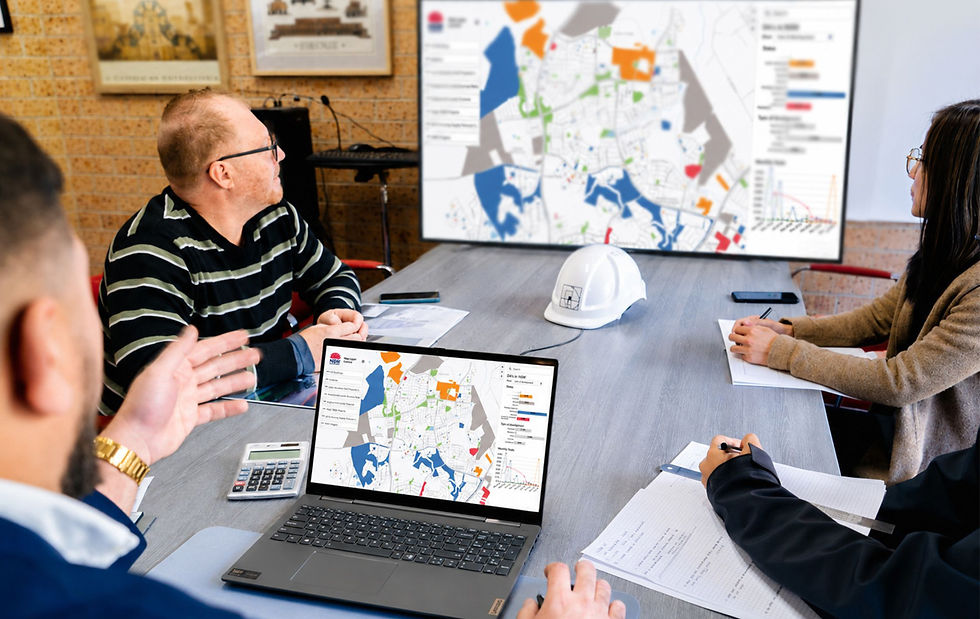
Not Every Site Is Suitable For A Childcare Centre
With demand for childcare services continuing to grow across New South Wales, many developers and investors are actively seeking sites that can accommodate childcare developments.
However, purchasing a site without undertaking proper feasibility investigations can be an expensive mistake. A site may appear ideal due to its location, size, or exposure to passing traffic. Yet hidden planning constraints, access limitations, operational challenges, or infrastructure requirements can significantly affect its development potential.
The reality is simple: successful childcare projects start long before the first concept plan is drawn. Before committing to a purchase, there are several critical questions that should be answered.
1. Is A Childcare Centre Permitted On The Site?
The first and most obvious question is often the one most overlooked. Just because a site appears suitable does not automatically mean a childcare centre can be approved.
Zoning, local environmental plans, development control plans, state planning policies, and council-specific requirements can all influence whether a childcare centre is permissible and how it will be assessed.
Understanding the planning framework early can prevent significant time and money being spent on a site that ultimately proves difficult to develop.
A planning review should always be one of the first steps in any feasibility assessment.
2. Does The Site Support Safe And Efficient Traffic Movement?
Traffic and vehicle access are among the most heavily scrutinised aspects of childcare developments.
Councils and traffic consultants will closely assess how parents enter, circulate through, and exit the site during peak drop-off and pick-up periods.
Questions that need to be considered include:
Can vehicles safely enter and exit the site?
Is there sufficient room for maneuvering?
Can vehicles queue without affecting surrounding roads?
Is pedestrian movement safe?
Will nearby residents be affected by traffic congestion?
A site with poor traffic performance may require extensive redesign, additional infrastructure works, or reduced centre capacity.
In many cases, traffic constraints become one of the biggest barriers to approval.
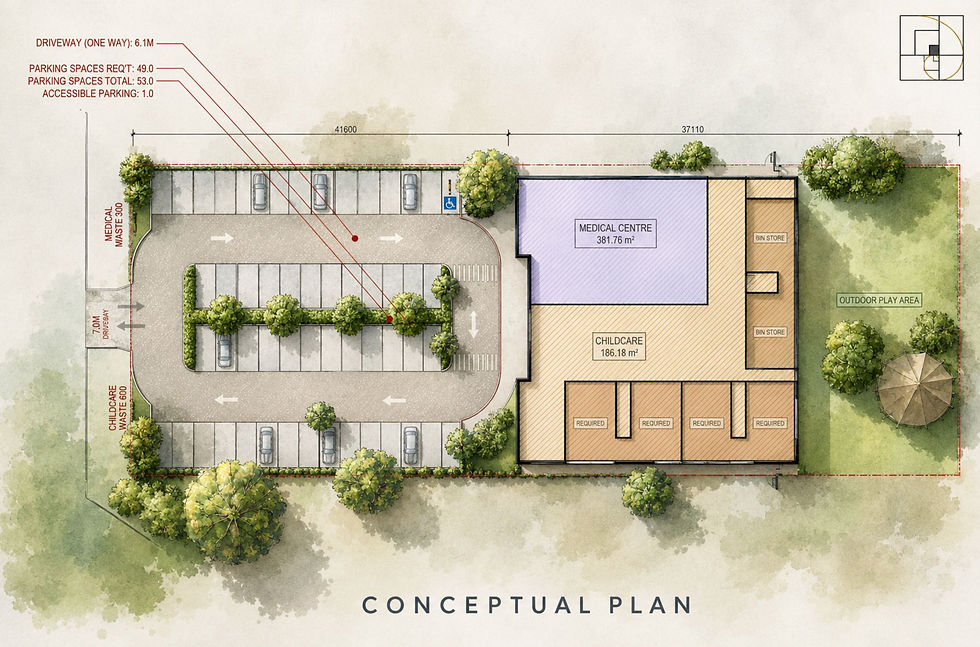
3. How Many Children Can The Site Realistically Accommodate?
Many people assume larger sites automatically support larger childcare centres.
In reality, centre capacity is influenced by much more than land size alone.
The achievable number of places may be affected by:
Outdoor play area requirements
Building setbacks
Parking provisions
Vehicle circulation
Landscaping requirements
Site shape and dimensions
Internal operational requirements
Understanding this early is essential because capacity often drives the commercial viability of the project.
4. What Are The Surrounding Site Constraints?
Every site exists within a broader context. Nearby development, infrastructure and environmental conditions can all influence approval outcomes.
Common constraints may include:
Busy roads
Residential interfaces
Easements
Flood affected land
Bushfire considerations
Noise impacts
Significant vegetation
Utility infrastructure
These factors do not necessarily prevent development, but they often influence design solutions, approval pathways, project costs and development timelines.
Identifying them early allows the project team to make informed decisions before substantial investment occurs.

5. Is The Location Supported By Demand?
A technically compliant childcare centre is not always a commercially successful childcare centre. Understanding local demographics is equally important.
Key questions include:
Is there population growth in the area?
Are young families moving into the catchment?
What is the existing supply of childcare services?
Are competing centres operating at capacity?
What future residential growth is planned nearby?
Strong demand fundamentals can significantly improve the long-term performance of a childcare centre.
Feasibility should therefore consider both planning viability and commercial viability.
6. Have The Right Consultants Been Involved Early?
One of the most common causes of project delays is discovering critical issues too late.
Successful childcare developments typically involve input from multiple specialists, including:
Building designers
Town planners
Traffic engineers
Civil engineers
Hydraulic consultants
BCA consultants
Acoustic consultants
Landscape consultants
Early consultant coordination often reveals opportunities and risks that may not be immediately obvious.
It is considerably easier and more cost-effective to address issues during feasibility than after a site has been purchased or detailed design has commenced.
7. Will The Design Work Operationally?
Obtaining approval is only one part of a successful childcare development. The centre must also function effectively for operators, educators, children and parents. Good childcare design considers:
Parent drop-off efficiency
Staff circulation
Room functionality
Outdoor play usability
Security and supervision
Service areas
Future maintenance requirements
A well-designed centre balances compliance requirements with day-to-day operational needs. This often has a direct impact on occupancy rates, staff satisfaction and long-term business performance.

The Costly Consequences of Assumptions
Many of the most expensive project problems originate during the site acquisition phase. Developers frequently encounter unexpected redesign costs, approval delays, reduced child capacity, additional infrastructure requirements and operational compromises because key feasibility questions were not addressed early enough.
Our process begins with understanding the site, planning controls, operational requirements and potential constraints before significant commitments are made. Through early feasibility assessments and consultant coordination, we help clients identify risks, uncover opportunities and establish a clearer pathway forward.
Everyone wants clarity before making a commitment.
Childcare centre developments require more than good design. They require informed decisions from the earliest stages of a project. By understanding opportunities, constraints and feasibility upfront, developers can reduce risk, improve project outcomes and move forward with greater confidence.
Perfect Square Design works with developers, investors and childcare operators to assess site feasibility, identify project risks and create a clear pathway forward before significant commitments are made.


Comments